Greetings
Greeting someone is a way of making room for them. Across Swahili-speaking communities, the opening can notice the person, the time of day, their family, their work, or the journey that brought them there. The warmth is in pausing long enough to recognise who is in front of you.
Age, familiarity, and setting all shape what feels natural. Friends may be quick and playful; an elder, host, or new acquaintance calls for a little more care. There is no single magic “hello” that carries every relationship.
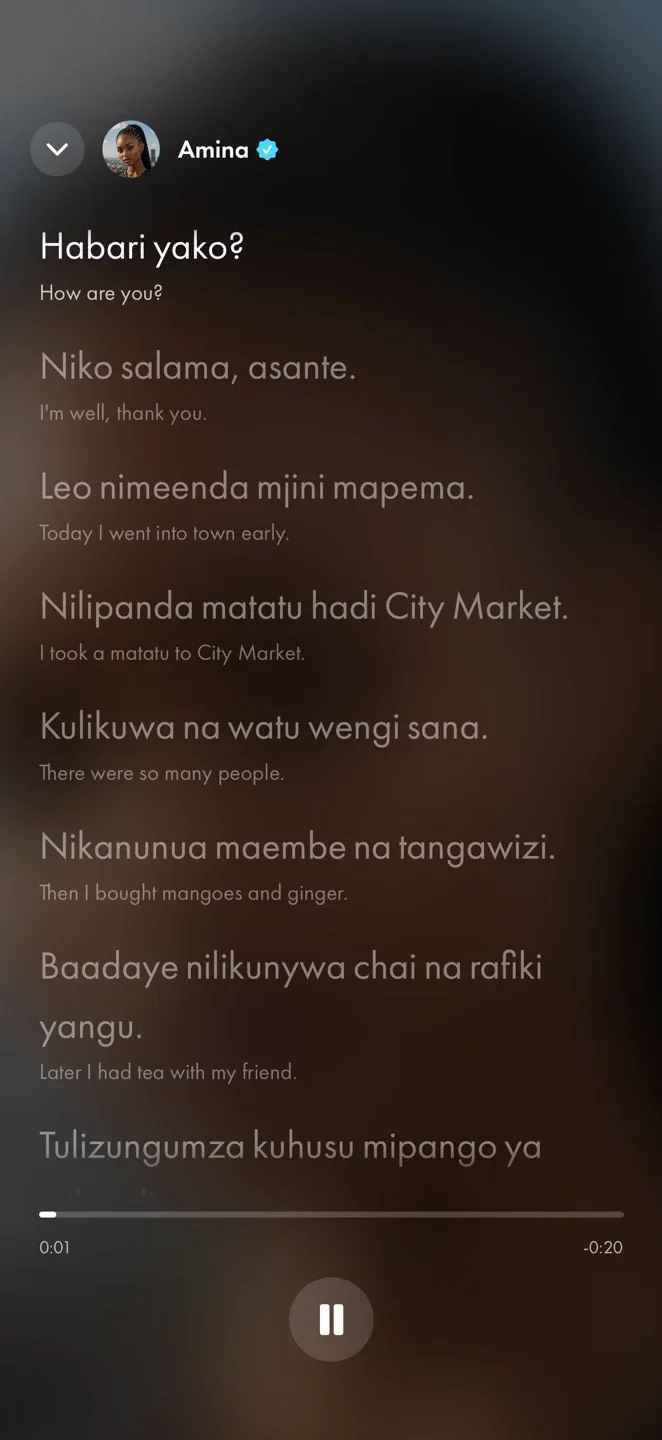
Habari asks after the news or how things are, so the answer is part of the greeting. It is a flexible everyday choice when you do not yet know what register fits.
Jambo jamboSwahilinoun
matter; affair; thing; also encountered in greeting formulas.
Open dictionary entry →HelloJambo. jamboSwahilinoun
matter; affair; thing; also encountered in greeting formulas.
Open dictionary entry →Hello.Jambo is real and widely understood, especially by visitors. In a longer everyday exchange, Habari? or a more relaxed Vipi? may sound more natural.
Vipi ,vipiSwahiliinterrogative · adverb
how?; in what way?; also a casual “how’s it going?”
Open dictionary entry →beshte ?How’s it going, friend?Vipi feels closer to “how’s it going?” than a direct hello. With beshte, it belongs in a casual exchange with a friend.
This is a relaxed Sheng exchange for familiar company. Sheng changes quickly across places and groups, so listen to how the people around you use it before making it your default.
Shikamoo shikamooSwahiliinterjection
a respectful greeting to an older person or someone of higher status.
Open dictionary entry →A respectful greeting to an older personMarahaba. marahabaSwahiliinterjection
a respectful response to Shikamoo, accepting the greeting.
Open dictionary entry →I accept your respect.Shikamoo is traditionally offered by a younger person to an older person, who replies Marahaba. The roles matter, so it is not a general greeting for every peer.
Usiku mwema -emaSwahiliadjective stem
good; an adjective stem appearing in agreement forms such as mwema and njema.
Open dictionary entry →Good nightUsiku mwema .-emaSwahiliadjective stem
good; an adjective stem appearing in agreement forms such as mwema and njema.
Open dictionary entry →Good night.Usiku mwema sends someone off at night. It is a farewell, not the evening opener Habari za jioni? University of Kansas Kiswahili Glossary
- TutaonanaSee you
Sawa. Okay. Safari njema -emaSwahiliadjective stem
good; an adjective stem appearing in agreement forms such as mwema and njema.
Open dictionary entry →Have a good journeyAsante. Thank you.
The exchanges above are available to read anytime.